Article: What Should Be on a Winter Bubble Tea Menu (UK Shops)?
What Should Be on a Winter Bubble Tea Menu (UK Shops)?
Winter Bubble Tea Menu: A Practical Guide for UK Cafés and Bubble Tea Shops
Winter doesn’t mean bubble tea has to leave your menu. With a small selection of warm drinks, you can offer a comforting seasonal range while keeping preparation manageable and service consistent.
This guide shows UK cafés and bubble tea shops how to build a winter bubble tea menu using familiar ingredients such as tea, milk, powders, syrups and tapioca pearls. It also covers how to adapt iced favourites into recipes designed to be served warm.
Winter bubble tea menu: quick service checklist
-
Start with two or three drinks: for example, a milk tea, a fruit-led tea and a chocolate drink.
-
Develop each warm drink as its own recipe; don’t simply remove the ice from an iced version.
-
Rebalance the liquid ingredients, such as tea, milk and water.
-
Adjust one ingredient at a time, then record the final recipe in grams and millilitres.
-
Use heat-safe preparation methods. Do not shake hot liquids in a sealed cold-drink shaker.
-
Check that each topping is suitable for the serving temperature and follow its product guidance.
-
Test the complete takeaway setup, including the cup, lid and how customers will reach the toppings.
Can bubble tea be served hot in winter?
Yes. Hot bubble tea can combine a warm tea or powder base with properly prepared tapioca pearls. You can also develop drinks such as hot chocolate with pearls or a tea latte with toppings.
The aim is to serve a balanced drink with a pleasant texture. Treat the warm version as its own recipe, even when it uses ingredients from an iced bestseller.
How to turn an iced bubble tea recipe into a winter drink
1. Rebuild the liquid balance
Ice takes up space in an iced drink and adds water as it melts. Removing it changes the finished volume and flavour concentration.
Write down the liquid ingredients in your cold recipe first. For the warm version, decide whether the missing volume should come from brewed tea, milk, water or a combination. Adding only water may weaken the flavour, while adding only milk may mask the tea.
Measure the finished drink in the cup you plan to serve, including the toppings and suitable headspace. A recipe made for a 500ml cup does not necessarily contain 500ml of liquid.
2. Adjust one ingredient at a time
Prepare a trial drink and change only one variable between versions. You might adjust the tea strength first, then the milk balance and finally the sweetness.
Taste the drink at its intended serving temperature, then taste it again after a few minutes. Record the final quantities in grams and millilitres so your team can reproduce the result.
3. Change the mixing method
For powder-based drinks, first mix the powder with a measured amount of warm liquid, following the product instructions. Check that it has dissolved evenly before adding the rest of the base.
Use a heat-resistant measuring jug and stir until smooth. Do not shake hot liquids in a sealed cold-drink shaker. Use equipment designed for hot preparation and follow its operating instructions.
4. Check the complete serving setup
Confirm that the cup and lid are designed for the intended serving temperature. Packaging used for iced drinks is not automatically suitable for hot drinks.
Consider how customers will reach the pearls and other toppings. A conventional coffee lid may work for a plain latte but be awkward for a drink with toppings. Test the complete cup-and-lid setup before launching the drink.
Which ingredients work best in a winter bubble tea menu?
Choose a base your team can prepare consistently, then assess each topping separately.
-
Black tea or roasted oolong: Trial as a milk tea base. Balance the brew with milk and sweetener rather than relying on the ratios from a cold recipe.
-
Milk or plant-based alternatives: Test the specific product with your tea or powder. Different alternatives can affect flavour, texture and how the drink mixes.
-
Chocolate and other drink powders: Check the preparation instructions and suitability of the specific powder for hot drinks.
-
Brown sugar or flavoured syrups: Measure consistently and taste them in the finished warm drink before adding more sweetness.
-
Cooked tapioca pearls: Prepare according to the supplier’s instructions, portion consistently and assemble drinks to order.
-
Coconut jelly: Check the product guidance and trial its texture in a warm drink before launch.
-
Popping boba and other jellies: Check the temperature suitability of the specific product. Do not assume that every cold-drink topping is suitable for hot drinks.
Getting tapioca pearls right during winter service
A warm drink still needs properly prepared pearls. Do not rely on the drink itself to finish cooking an undercooked batch.
-
Follow the instructions for the exact pearl product. Standard, instant and quick-cook products can have different preparation requirements.
-
Check the texture before service and label batches with their preparation and discard times.
-
During quieter trading periods, plan smaller batches around expected orders.
-
Add a measured portion of pearls to the cup, then assemble each drink to order.
-
Include any syrup served with the pearls in your sweetness calculation.
Always follow the instructions for the specific product you are using and your shop’s food safety procedures.
Three winter bubble tea drinks to try
The recipes below are starting points for menu development. The stated 500ml size refers to the serving cup; the final fill will vary depending on the products, toppings and cup you use. Trial each drink in your actual serving setup and adjust the quantities before adding it to your menu.
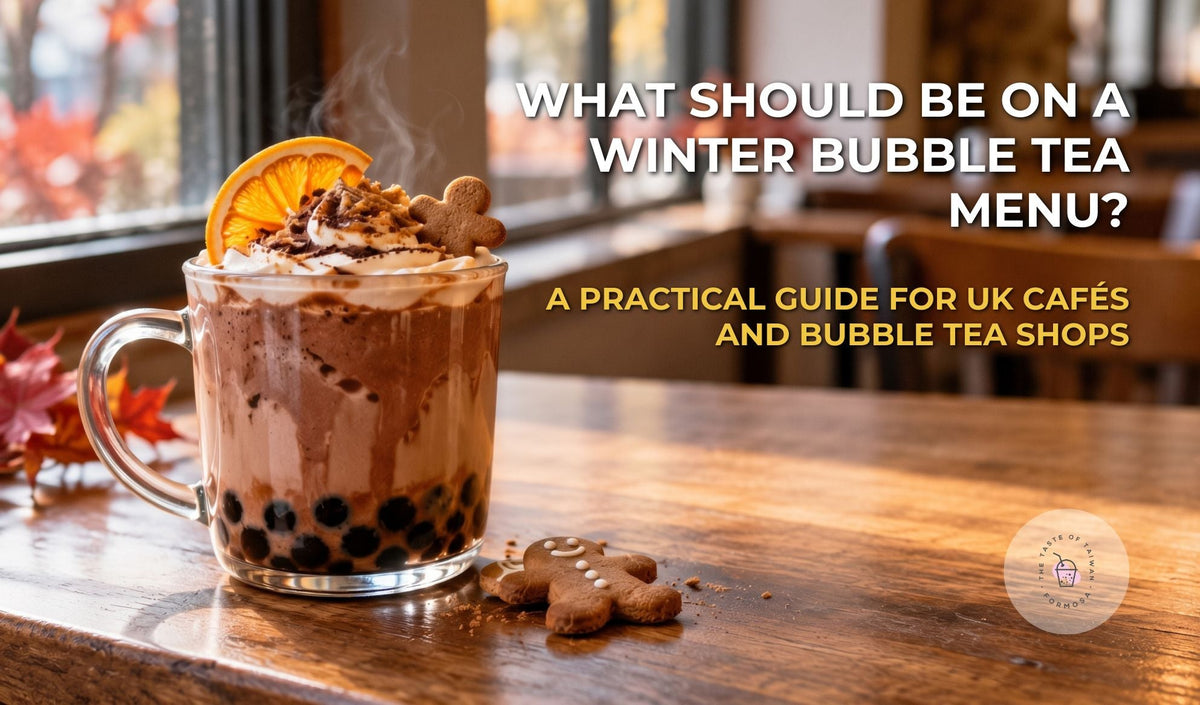
1. Choco-Orange (Gingerbread) Boba

Serving cup: 500ml
Topping: 100ml portion of cooked tapioca pearls
Base ingredients:
-
45g chocolate powder
-
15g creamer powder
-
20ml orange syrup
-
Approximately 300ml hot water
-
Optional: 5ml cinnamon syrup
Method:
-
Add the pearls to the serving cup.
-
In a heat-resistant jug, dissolve the chocolate powder and creamer in the hot water until smooth.
-
Stir in the orange syrup and, if using, cinnamon syrup.
-
Pour over the pearls, leaving room for the garnish.
To serve: Add optional whipped cream and 5–10g of gingerbread crumble just before serving.
2. Biscult Milk Tea

Serving cup: 500ml
Topping: 100ml portion of brown sugar jelly
Base ingredients:
-
25g Biscult spread
-
10ml brown sugar syrup
-
20g creamer powder
-
300ml hot Assam Tea
Method:
-
Drizzle the brown sugar syrup around the inside of the serving cup to create a cup lining, then add the jelly.
-
In a heat-resistant jug, stir the Biscult spread and creamer powder into the hot Assam tea until smooth.
-
Mix thoroughly.
-
Pour into the cup and serve.
Service note: Keep the Assam preparation consistent so that the tea remains noticeable alongside the biscuit flavour.
3. Green Apple Crumble Tea

Serving cup: 500ml
Topping: 100ml portion of coconut jelly, if suitable for the serving temperature
Base ingredients:
-
30g diced apple
-
15ml green apple syrup
-
5ml cinnamon syrup
-
100ml hot water
-
200ml hot Earl grey black tea
-
Optional: 5g vanilla syrup
-
Optional garnish: a small pinch of biscuit crumble
Method:
-
Add the coconut jelly to the serving cup.
-
In a heat-resistant jug, mix the diced apple, green apple syrup and cinnamon syrup with the hot water. Add the vanilla syrup if using.
-
Add the hot Earl Grey tea and stir.
-
Pour into the cup and serve. Add the optional biscuit crumble just before serving.
Service note: Test the cup, lid and utensil setup so customers can comfortably reach the apple pieces and jelly.
Two more winter menu ideas
-
Crème Brûlée Chocolate Boba: Build the base in a heat-resistant jug, pour it over pearls and leave room for the foam.
-
Biscoff Coffee Latte: For cafés with an espresso machine, stir the Biscoff spread and syrup into the espresso before adding hot milk or oat drink.
Common winter bubble tea problems: what to check first
-
The drink tastes watery: Check how you replaced the ice volume and whether the tea or powder quantity suits the finished drink.
-
The drink tastes too sweet: Count the syrup, sweetened powder and any syrup served with the pearls.
-
The powder forms lumps: Review the mixing order and follow the product’s preparation instructions.
-
The tea flavour disappears: Check the tea-to-milk ratio and standardise how the tea is brewed.
-
The pearls disappoint: Recheck the cooking instructions, batch age and texture before assembly.
-
The takeaway drink is awkward to consume: Test the cup, lid and access to the toppings.
Frequently asked questions
Can you use the same ingredients for hot and cold bubble tea?
Often, yes, but check the suitability of each product. Develop a separate warm recipe because removing the ice changes the drink’s volume and balance.
Can tapioca pearls be used in hot drinks?
Suitable cooked tapioca pearls can be used in warm milk teas and other drinks. Follow the cooking and use instructions for the specific product, and assemble drinks to order.
Can every bubble tea topping be served hot?
No. Suitability depends on the specific product. Trial each topping and follow its product guidance rather than assuming that every topping is interchangeable.
What cups and lids work best for hot bubble tea takeaway in the UK?
Use cups and lids designed for hot drinks, and test how customers will safely reach the pearls or other toppings. Trial the complete cup-and-lid setup before launch.
How many winter bubble tea drinks should a café launch?
Two or three is a practical starting point. Trial a small selection, review orders and customer feedback, then expand the recipes that work well for your team.
Develop your winter bubble tea menu with Boba Formosa
Looking to add hot bubble tea to your winter menu? Explore our wholesale ingredients or contact the Boba Formosa team for our full 2026 autumn/winter recipes and guidance on choosing ingredients for your menu.